
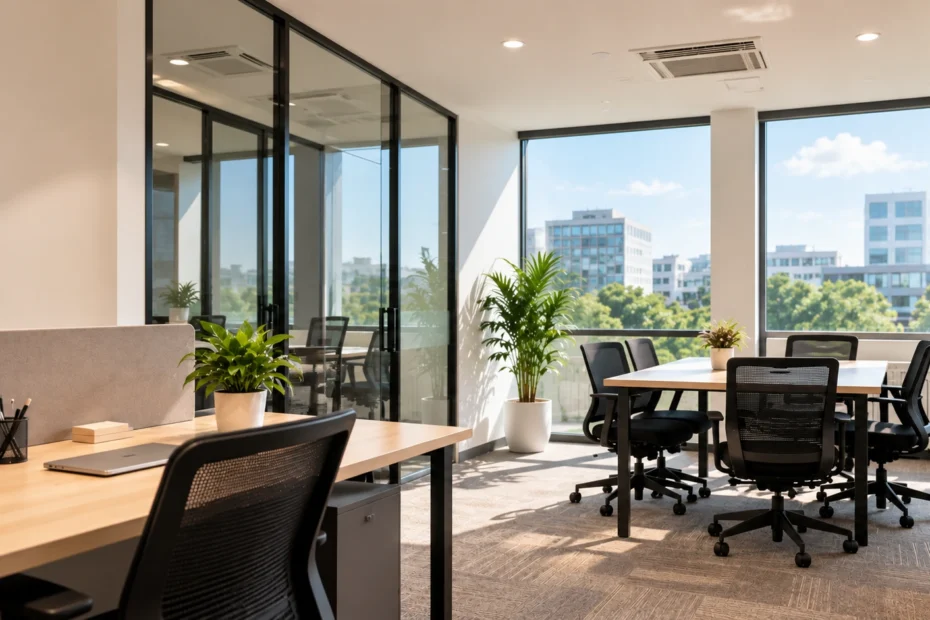
Choosing the right office size is an important decision for any business. Too little space can make the workplace feel cramped, while renting more space than you need may increase your operating costs unnecessarily.
Whether you are starting a new business, moving out of a home office, expanding your team or relocating to a new workplace, understanding how much office space you actually need can help you make a more practical decision.
The right size depends on more than just the number of employees. Your working style, meeting requirements, storage needs and future growth plans should all be considered before choosing an office.
Start With Your Current Team Size
Your number of employees is a good starting point when estimating your office space requirements.
A solo entrepreneur or freelancer may only need a compact private office with enough room for a desk, chair and essential equipment. A small team will naturally require more space for individual workstations and movement around the office.
However, headcount alone does not determine how much space you need.
Two businesses with the same number of employees may have very different requirements. A team that works primarily on laptops may require less space than a business that uses multiple monitors, equipment, filing cabinets or other workplace facilities.
Consider How Your Team Works
Think about what happens in your office on a typical working day.
Does everyone work from the office every day, or does your company follow a hybrid working arrangement? Do employees mainly work independently, or do they frequently collaborate?
A business with a hybrid work arrangement may not require the same amount of space as one where every employee is in the office at the same time.
On the other hand, businesses that regularly hold discussions, meet clients or work collaboratively may need additional space beyond individual desks.
Understanding how your team actually uses the workplace can help you avoid paying for space that remains unused.
Don’t Forget Meeting and Common Areas
Workstations are only one part of an office.
Depending on your operations, you may also need space for:
- Meetings and discussions
- Client visits
- Storage cabinets
- Printers and office equipment
- Pantry or refreshment areas
- Break areas
- Product samples or business materials
These requirements can significantly affect the amount of office space your business needs.
Before choosing an office, consider both your daily working space and the additional areas required to support your operations.
Think About Storage Requirements
Storage is often overlooked when businesses estimate their office space needs.
Documents, files, supplies, marketing materials, equipment and inventory can gradually take up valuable working space.
Consider how much physical storage your business currently requires and whether this is likely to increase.
If storage is taking up a large portion of your office, another option is to keep less frequently used items in a separate storage space instead of renting a larger office solely to accommodate them.
Plan for Future Growth
Your office may suit your team today, but what happens if you hire additional employees six months from now?
Businesses expecting growth should consider whether there is enough room to accommodate additional workstations without making the office uncomfortable.
At the same time, it may not make financial sense to rent a significantly larger office simply because your business might grow in the future.
Consider your realistic hiring plans and expected business growth when deciding how much additional capacity you need.
Consider Your Furniture and Office Layout
The same amount of floor space can feel very different depending on how it is arranged.
Large desks, cabinets and bulky furniture can quickly reduce usable space, while a well-planned layout can help a smaller office function efficiently.
Before committing to an office, consider where your desks, chairs, cabinets and equipment will be placed. Make sure there is sufficient room for employees to move around comfortably without obstructing entrances or walkways.
Viewing the actual office space can also give you a much better idea of its suitability than relying on the floor area alone.
Private Office, Serviced Office or Fitted Office?
The type of office you choose can also affect how much space you need.
A serviced office can be suitable for individuals and small teams looking for a ready-to-use workspace without having to set up an entire office from scratch.
For businesses requiring a larger dedicated workspace or greater control over their office setup, a fitted office may be another option to consider.
The right choice depends on your team size, operational requirements, preferred setup and plans for the space.
Avoid Choosing an Office Based on Size Alone
Square footage is important, but it should not be the only factor in your decision.
You should also consider accessibility, office layout, facilities, operating hours, privacy and whether the space supports the way your business works.
A smaller office with an efficient layout may sometimes be more practical than a larger space with poorly utilised areas.
This is why an in-person viewing can be useful before making a final decision.
Finding the Right Office Space in Singapore
There is no single office size that works for every business.
Start by looking at your current headcount, daily working arrangements, storage requirements and expected growth. From there, you can determine whether you need a compact private office for a small team or a larger dedicated workspace.
EBC Lifestyle Hub offers serviced and fitted office spaces at 50 Tagore Lane, Singapore, with options available for different business and team requirements.
If you are unsure which office size is suitable for your business, contact us to check current availability or arrange a viewing.