
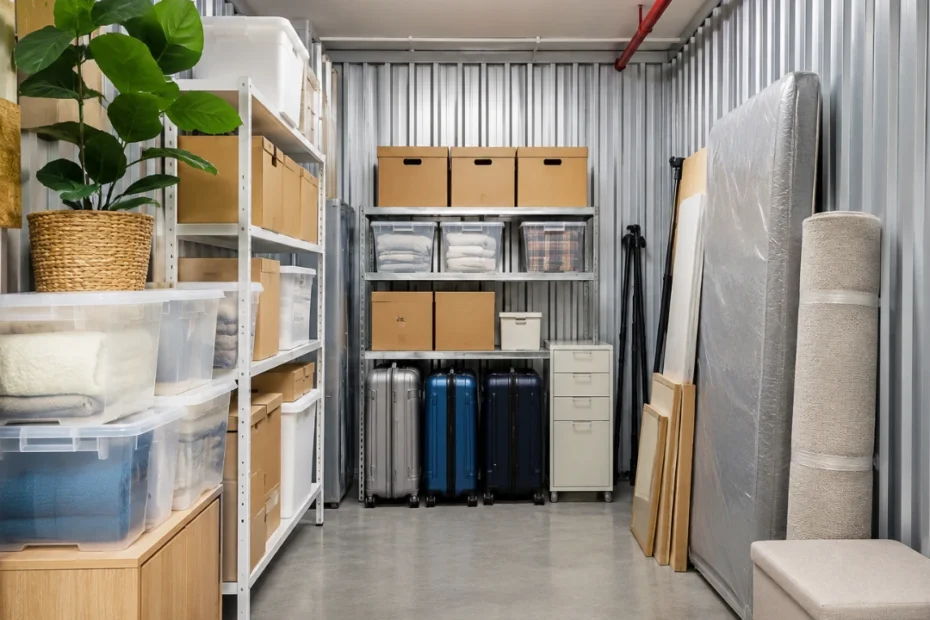
Whether you’re decluttering your home, moving to a new place, or looking for additional space for your business, renting a self-storage unit can help you keep your belongings organised.
However, simply placing everything inside a storage unit without proper planning can make it difficult to find what you need later. Poor organisation may also result in wasted space, damaged items, and unnecessary frustration.
With the right approach, you can make better use of your available storage space while keeping your belongings neat and accessible.
In this guide, we’ll share 10 practical self-storage organisation tips to help you maximise your storage unit and make the most of your storage rental in Singapore.
1. Plan Your Storage Layout Before Moving In
Before bringing your belongings into your self-storage unit, take some time to plan how you want to arrange everything.
Start by identifying the items you intend to store and grouping them according to their size, weight, and frequency of use.
For example:
- Frequently used items: Place near the entrance for easy access.
- Seasonal belongings: Store towards the back or in less accessible areas.
- Heavy items: Keep at the bottom to maintain stability.
- Fragile belongings: Place in clearly labelled boxes away from heavy objects.
A simple storage layout can help you avoid unnecessary rearranging whenever you need to retrieve something.
Planning ahead also allows you to estimate how much storage space you actually need.
2. Choose the Right Self-Storage Unit Size
Selecting the right storage unit size is one of the most important steps in organising your belongings.
A unit that is too small may make stacking and accessing your items difficult. On the other hand, renting a much larger unit than necessary could mean paying for space you don’t use.
Before choosing a self-storage unit in Singapore, consider the number of boxes, furniture pieces, appliances, and other belongings you plan to store.
At EBC Lifestyle Hub, we offer a range of air-conditioned self-storage unit sizes to accommodate different storage requirements:
- Locker (8–15 sqft): Suitable for smaller personal belongings, documents, and compact storage needs.
- Small (15–40 sqft): Ideal for boxes, luggage, and household items.
- Medium (41–70 sqft): Suitable for larger collections of belongings and selected furniture items.
- Large (71–100 sqft): Provides additional space for furniture, household belongings, or business inventory.
- Jumbo (101–150 sqft): Designed for more substantial personal or business storage requirements.
The appropriate unit size will depend on the dimensions and arrangement of your belongings.
Choosing the right size from the beginning can make your storage experience more manageable.
3. Use Strong, Stackable Storage Boxes
One of the easiest ways to organise a self-storage unit is by using sturdy, stackable storage boxes.
Instead of placing belongings in bags or irregularly shaped containers, consider using boxes of similar dimensions.
This makes it easier to stack items neatly and use vertical space.
Here are some useful packing tips:
- Choose durable boxes that can support the weight of their contents.
- Avoid overpacking boxes, especially those containing books or heavy objects.
- Use smaller boxes for heavier belongings.
- Place heavier boxes at the bottom and lighter boxes on top.
- Ensure boxes are securely closed before stacking.
Clear plastic containers can also be useful for belongings you may need to identify quickly.
Keeping your storage containers consistent in size can help create a more organised arrangement.
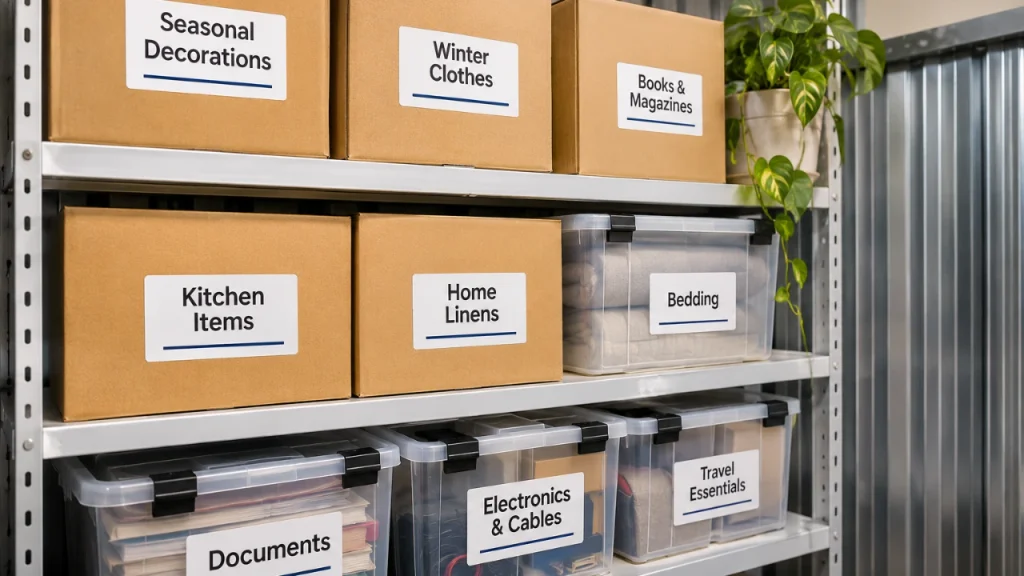
4. Label Every Box Clearly
Imagine needing an important document but having to open ten different boxes to find it.
Proper labelling can save you time and effort.
Instead of using general labels such as “Miscellaneous” or “Stuff”, be specific about what each box contains.
For example:
- Box 01 – Winter Clothes
- Box 02 – Kitchen Utensils
- Box 03 – Office Documents
- Box 04 – Christmas Decorations
- Box 05 – Books and Magazines
Place labels on at least two visible sides of each box so you can identify the contents even when boxes are stacked.
For better organisation, consider creating a simple inventory list using a spreadsheet.
You can record the box number, contents, and approximate location inside your storage unit.
This is especially helpful when storing business documents, inventory, or belongings for an extended period.
5. Make Use of Vertical Storage Space
When organising a self-storage unit, don’t focus only on the floor area.
Using the available vertical space can help you store more belongings without overcrowding the unit.
Stack suitable boxes carefully and place larger, heavier items at the bottom.
If permitted, freestanding shelving can also help organise smaller boxes and belongings.
However, always ensure that your storage arrangement is stable and does not exceed the safe stacking height or obstruct any building safety equipment.
Avoid placing heavy items on unstable furniture or stacking boxes too high.
A well-organised vertical arrangement can make your storage unit feel more spacious and easier to manage.
6. Keep a Clear Pathway for Easy Access
One common mistake when using self-storage is filling every available space without leaving room to reach belongings.
Although this may seem like an efficient way to maximise storage capacity, it can make retrieving items inconvenient.
If your storage unit is large enough, consider leaving a narrow pathway between your boxes or furniture.
This allows you to access belongings stored towards the back without having to remove everything in front.
For smaller storage units, place frequently used belongings near the entrance and less frequently accessed items towards the back.
The goal is to balance storage capacity with accessibility.
7. Protect Furniture and Fragile Belongings
If you’re storing furniture, electronics, decorative items, or other fragile belongings, proper packing is essential.
Use suitable protective materials to reduce the risk of scratches, dust accumulation, and accidental damage.
Consider the following precautions:
- Wrap fragile items individually using appropriate protective materials.
- Use furniture covers to protect surfaces from dust.
- Disassemble suitable furniture to save space.
- Store mirrors and glass panels securely to prevent tipping.
- Keep small screws and furniture fittings in labelled bags.
- Ensure appliances are clean and dry before storage.
Avoid placing heavy boxes directly on fragile furniture or delicate belongings.
Taking a little extra time to protect your items before moving them into storage can help maintain their condition.
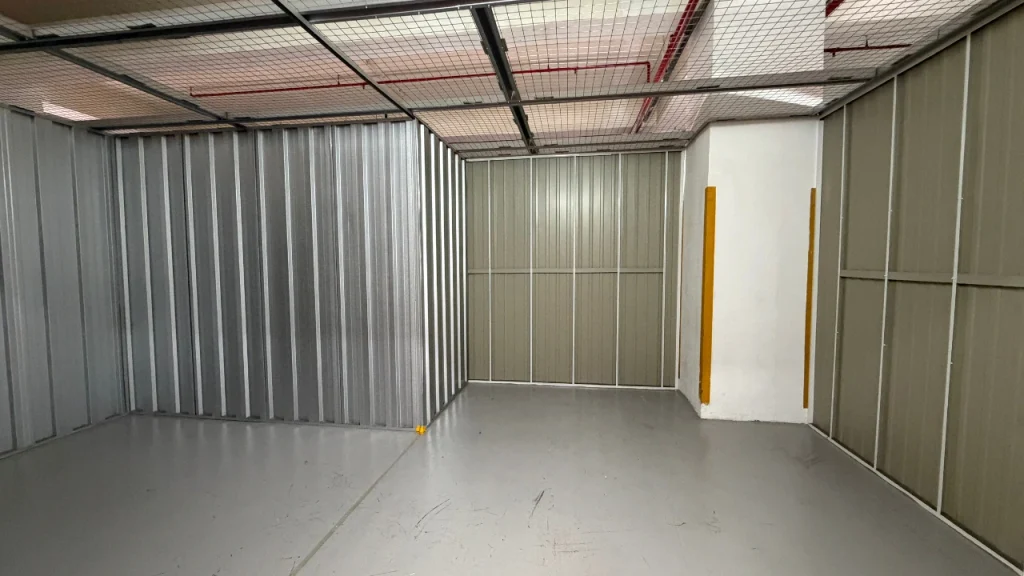
8. Consider Air-Conditioned Self-Storage in Singapore
Singapore’s warm and humid climate is an important factor to consider when storing personal or business belongings.
Certain items may be more sensitive to temperature changes, particularly when stored for extended periods.
Choosing an air-conditioned self-storage unit in Singapore can provide a more consistent temperature environment compared with a typical non-air-conditioned space.
Air-conditioned storage may be worth considering for items such as:
- Clothing and personal belongings
- Books and paper documents
- Selected household furniture
- Business inventory
- Other belongings that benefit from a more consistent storage temperature
However, air-conditioning does not eliminate every storage risk. Proper packing, dry storage conditions, and regular checks remain important.
At EBC Lifestyle Hub, our self-storage units are air-conditioned, offering storage options for both personal and business needs.
9. Keep Frequently Used Items Near the Entrance
Not everything in your storage unit will be accessed at the same frequency.
For example, you may need business inventory every week but only retrieve seasonal decorations once a year.
Organising belongings according to how often you use them can make a significant difference.
Place regularly accessed items near the front of your storage unit.
Items that you rarely need can be stored further towards the back, provided they remain safely arranged.
You can also group belongings into categories, such as:
- Household belongings
- Seasonal clothing
- Office supplies
- Business inventory
- Personal collections
This approach reduces the time spent searching for items and helps maintain an organised storage space.
10. Review and Reorganise Your Storage Unit Regularly
Keeping your self-storage unit organised is an ongoing process.
Over time, you may add new belongings, remove existing items, or discover that certain things are no longer needed.
Reviewing your storage unit periodically can help prevent unnecessary clutter.
During each review:
- Check whether your boxes remain properly labelled.
- Remove belongings you no longer need to store.
- Inspect packaging for signs of wear or damage.
- Update your inventory list.
- Rearrange items based on how frequently you access them.
Regular organisation also helps you assess whether your current storage unit size still meets your needs.
If your storage requirements change, you may wish to explore a different unit size.
Why Choose EBC Lifestyle Hub for Self-Storage in Singapore?
Whether you need extra space for personal belongings, household items, or business inventory, finding a suitable storage unit can make organisation easier.
Located at 50 Tagore Lane, Singapore 787494, EBC Lifestyle Hub offers air-conditioned self-storage units in a variety of sizes.
Our storage options include:
- Air-Conditioned Self-Storage: Storage space for personal and business belongings.
- Multiple Unit Sizes: From compact lockers to larger storage units.
- Personal Storage: Suitable for household belongings, luggage, clothing, and other items.
- Business Storage: Additional space for selected inventory, documents, and business-related belongings.
With different unit sizes available, you can explore a storage option that matches your requirements and the volume of belongings you need to store.
Enjoy Up to 40% OFF Self-Storage Rental for New Customers!
Looking for air-conditioned self-storage in Singapore?
EBC Lifestyle Hub offers up to 40% OFF for new customers, subject to applicable terms and conditions.
Whether you’re decluttering your home, preparing for a move, or managing additional business inventory, our team can help you explore the available storage unit sizes.
📍 EBC Lifestyle Hub
50 Tagore Lane, Singapore 787494
📲 WhatsApp: 8028 2531
Contact us today to enquire about available units, rental rates, or arrange a viewing.
Promotion is applicable to new customers. T&Cs apply.
Final Thoughts
Organising your self-storage unit doesn’t have to be complicated.
By choosing the right unit size, using suitable storage boxes, labelling belongings clearly, and planning your layout, you can make better use of your available space.
Remember to protect fragile items, keep frequently accessed belongings within reach, and review your storage arrangement regularly.
With a little preparation, your self-storage unit can remain organised, accessible, and easier to manage over time.
If you’re searching for self-storage rental in Singapore, explore the air-conditioned storage options available at EBC Lifestyle Hub.