
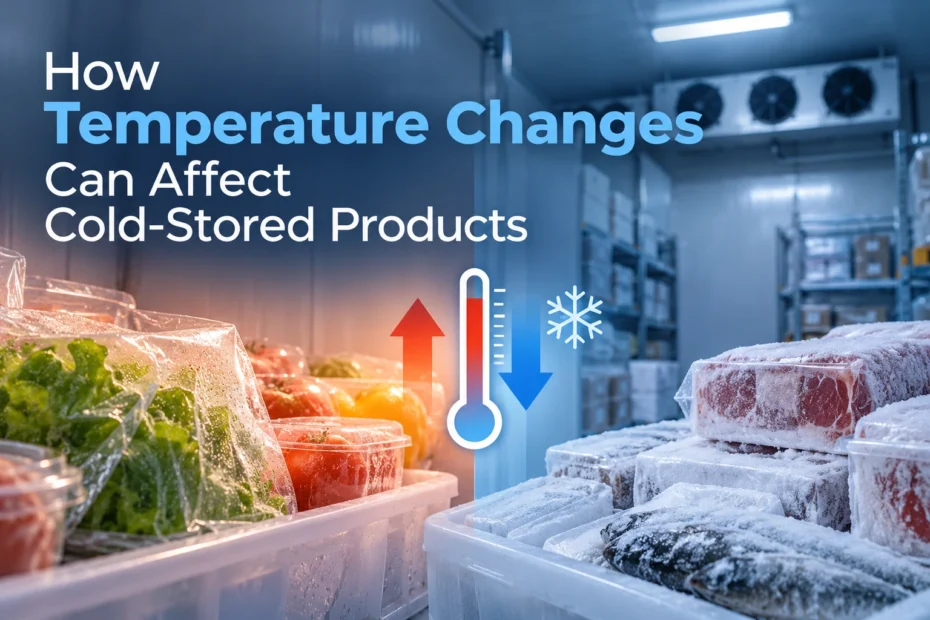
Temperature plays an important role in the storage of chilled and frozen products. For businesses handling food, beverages and other temperature-sensitive goods, maintaining an appropriate and stable storage environment can help preserve product quality throughout the storage period.
Even relatively small or repeated temperature changes may affect certain products over time. Understanding how temperature fluctuations happen and how they can affect stored goods can help businesses manage their cold storage more effectively.
Why Is Temperature Stability Important in Cold Storage?
Cold storage is designed to keep products within a suitable temperature range based on their individual storage requirements.
When temperatures rise and fall repeatedly, products may be exposed to conditions outside their recommended range. The impact will depend on factors such as the type of product, packaging, storage duration and the extent of the temperature change.
For businesses storing temperature-sensitive inventory, maintaining consistent conditions is therefore an important part of proper storage management.
How Temperature Changes Can Affect Chilled Products
Chilled products are generally stored at temperatures above freezing, but their exact requirements can vary considerably.
Temperature changes may affect the freshness, texture, appearance or overall quality of certain chilled products. If products are repeatedly exposed to warmer conditions, their usable storage life may also be affected.
Businesses should always follow the recommended storage requirements for each type of product rather than assuming that one temperature is suitable for everything in a cold room.
How Temperature Changes Can Affect Frozen Products
Frozen products require consistently low temperatures to remain properly frozen.
If the surrounding temperature rises significantly, some products may begin to soften or partially thaw. When temperatures fall again, they may refreeze. Repeated temperature changes can affect the texture and quality of certain frozen products and may also lead to the formation of ice crystals.
Maintaining suitable frozen storage conditions can help reduce unnecessary temperature fluctuations during storage.
What Can Cause Temperature Fluctuations?
Temperature changes inside a cold storage environment can happen for several reasons.
Frequent or prolonged door opening can allow warmer air to enter the space. Overloading the cold room or arranging products in a way that restricts airflow may also make it more difficult to maintain consistent conditions throughout the room.
Other factors may include equipment performance, incorrect temperature settings and introducing products that have not been properly chilled or frozen beforehand.
Good storage practices can help minimise some of these issues.
How Can Businesses Manage Cold-Stored Products More Effectively?
Businesses can take several practical steps to improve cold storage management:
- Check the recommended storage temperature for each product.
- Organise inventory to allow sufficient airflow around stored goods.
- Avoid unnecessarily frequent or prolonged door opening.
- Monitor storage temperatures regularly.
- Use appropriate packaging for chilled and frozen products.
- Follow a clear inventory rotation system, such as First In, First Out (FIFO).
- Avoid overcrowding the storage space.
It is also important to review storage requirements whenever a business introduces new products, as different goods may require different temperature conditions.
Choosing the Right Cold Storage Solution
Cold storage requirements can vary depending on the type of products being stored, inventory volume and required temperature range.
Businesses with growing inventories may require more dedicated space than standard commercial refrigerators or freezers can provide. A dedicated cold room can provide additional storage capacity while allowing businesses to select conditions that better suit their operational requirements.
EBC Lifestyle Hub offers cold room storage in Singapore for businesses requiring chilled or frozen storage space. Cold rooms are available from 200 sqft, with temperatures adjustable down to -20°C depending on storage requirements.
For businesses looking for additional cold storage space, contact us to check current availability or arrange a viewing.