
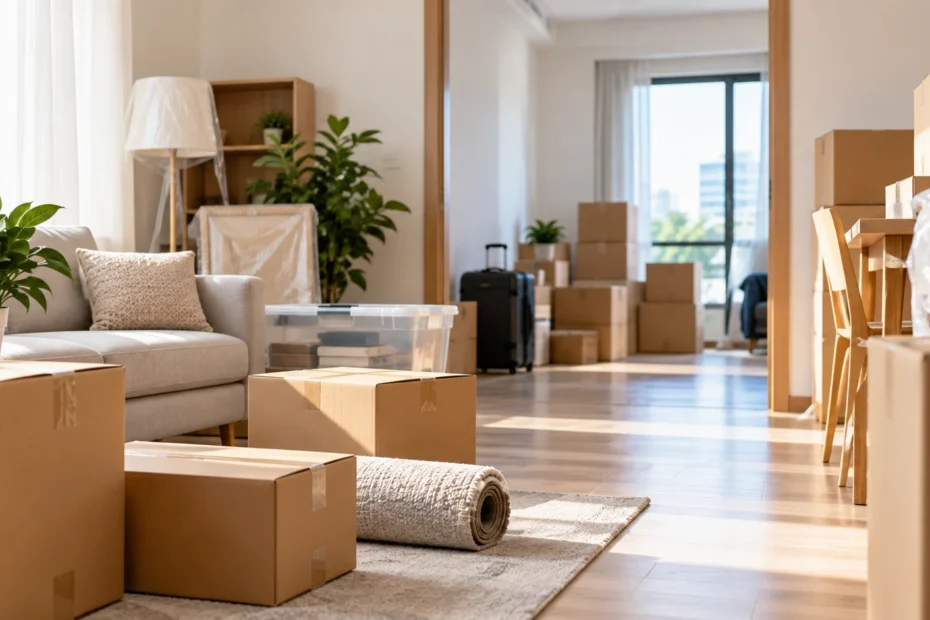
Moving house can be exciting, but it also comes with plenty of planning, packing and organising. From deciding what to bring to coordinating renovation and moving dates, it is common to find yourself surrounded by boxes and furniture long before moving day arrives.
This is where self-storage can be useful. Having a separate space for your belongings can make different stages of the moving process easier to manage, especially when your moving dates do not line up perfectly.
Here are some ways self-storage can help when moving house.
1. Create More Space Before You Start Packing
Packing becomes much easier when you are not trying to organise everything at once.
Before moving day, you can start by separating belongings that you do not need immediately. Seasonal items, books, decorations, spare furniture and other less frequently used belongings can be moved into storage first.
This gives you more room at home to sort, pack and label the items that will be moving with you.
Instead of filling every room with packed boxes, you can gradually prepare for the move while keeping your home more manageable.
2. Keep Belongings Somewhere During a Gap Between Homes
Moving dates do not always match perfectly.
You may need to leave your current property before your new home is ready. Renovation delays, handover schedules or tenancy arrangements can sometimes create a gap of several days, weeks or even longer.
Rather than trying to find temporary space for furniture, appliances and boxes, a self-storage unit can provide a place to keep your belongings until your new home is ready.
This can be particularly useful when you have large items that are difficult to move repeatedly between temporary locations.
3. Make Renovation Easier to Manage
If your new home requires renovation before you move in, bringing all your belongings in immediately may not be practical.
Furniture and boxes can take up valuable working space and may need to be moved repeatedly while contractors complete their work.
Keeping some belongings in self-storage allows renovation work to continue with fewer items in the way. Once the work is completed, you can move your belongings into the new home gradually.
For items that may benefit from a more controlled environment, an air-conditioned self-storage unit can also be considered.
4. Make Moving Day Less Overwhelming
Trying to move everything in a single day can be stressful.
Furniture, appliances, boxes and personal belongings can quickly pile up at the new property, particularly when you have not decided where everything should go.
Self-storage gives you the option to move in stages.
You can bring essential items to your new home first and leave less urgent belongings in storage. Once you have settled in, you can retrieve the remaining items gradually.
This can make unpacking more organised and reduce unnecessary clutter during the first few days in your new home.
5. Help When Moving Into a Smaller Home
Not every move comes with more space.
If you are downsizing to a smaller apartment or house, you may discover that some of your existing furniture and belongings no longer fit comfortably.
However, you may not be ready to sell, donate or dispose of everything immediately.
A self-storage unit gives you additional time to decide what you want to keep. You can move essential belongings into your new home first and deal with the remaining items later without overcrowding your new space.
6. Store Furniture You Are Not Ready to Use
Furniture can be one of the most difficult parts of moving.
Your existing dining table, cabinets, chairs or other pieces may not fit the layout of your new home. You may also be waiting for renovation work to finish before deciding where certain furniture should go.
Instead of making an immediate decision, you can temporarily place these items in storage.
This gives you more time to plan your new home’s layout and decide which pieces you want to keep.
7. Keep Your New Home Organised While Unpacking
It is tempting to move every box into your new home immediately, but this can quickly make the space feel cluttered.
Keeping non-essential items in storage allows you to unpack room by room.
You can start with everyday essentials such as clothing, kitchen items and important personal belongings before bringing in decorations, books, collections and other items.
A gradual approach can make it easier to decide where everything belongs rather than simply finding somewhere to put each box.
What Should You Put in Storage When Moving?
The items you choose to store will depend on your situation, but common examples include:
- Furniture that is not immediately needed
- Books and collections
- Seasonal decorations
- Luggage
- Household appliances
- Clothing
- Sports equipment
- Boxes of personal belongings
- Home décor
- Items intended for later rooms or renovation stages
Before placing anything into storage, pack and label your boxes clearly. Keeping an inventory can also make it easier to find specific items when you need them.
Choosing the Right Self-Storage Size for Your Move
The amount of storage space you need depends on how much you are moving.
If you only need somewhere for boxes and smaller household items, a compact storage unit may be sufficient. Larger moves involving furniture and appliances will naturally require more space.
Think about what you plan to store before choosing a unit. Proper stacking and organisation can also help you use the available space more efficiently.
If possible, leave a small walkway inside the unit so that you can reach belongings without having to move everything each time you visit.
Make Your Move More Manageable With Self-Storage
Moving house involves many moving parts, and having somewhere to temporarily keep your belongings can make the process easier to organise.
Whether you are dealing with a gap between properties, waiting for renovation work to finish, downsizing or simply trying to avoid filling your new home with boxes all at once, self-storage can provide additional space during the transition.
EBC Lifestyle Hub offers air-conditioned self-storage in Singapore with a range of unit sizes for household and personal storage needs.
If you are preparing for a move and need additional storage space, contact us to check current availability or arrange a viewing.