
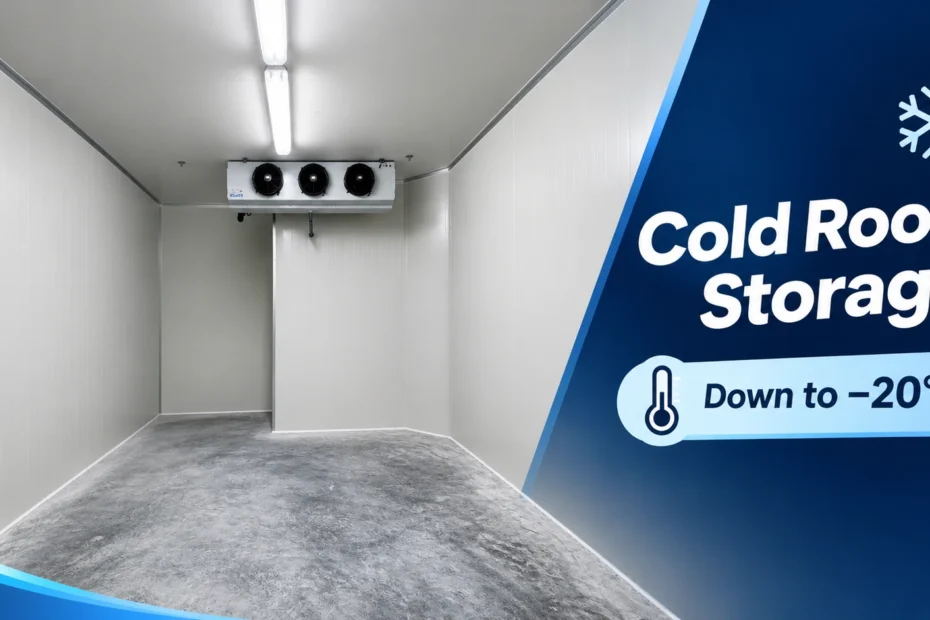
Moving to a new cold room is an important decision for businesses that rely on temperature-controlled storage. Whether you’re relocating due to rising rental costs, limited storage capacity, or changing operational needs, proper planning can help minimise disruptions and protect your inventory.
For food importers, distributors, and businesses handling chilled or frozen products, choosing a suitable cold room involves more than finding available space.
Here are six important factors to consider before relocating your cold room storage in Singapore.
1. Review Your Current Cold Room Requirements
Before searching for a new cold room, evaluate your existing storage arrangements.
Consider whether your current space is sufficient for daily operations and whether your business expects changes in inventory volume.
Some important questions include:
- Is your existing cold room becoming overcrowded?
- Do you need additional space for incoming inventory?
- Are your current storage arrangements suitable for your products?
- Does your existing facility support your operating schedule?
Understanding your requirements can help you identify a cold room that better supports your business.
2. Confirm the Temperature Requirements of Your Products
Different products require different storage temperatures.
Before relocating, confirm the temperature ranges needed to maintain your products’ quality and safety.
For example, frozen food generally requires lower storage temperatures than chilled products. However, the appropriate conditions depend on the specific products and applicable food safety requirements.
When evaluating a new cold room, check whether the facility can maintain the required temperature consistently.
Businesses should also consider how products will be kept within their required temperature range during transportation and transfer.
3. Plan Your Inventory Transfer Carefully
Relocating temperature-sensitive inventory requires careful coordination.
Without proper planning, products may be exposed to unsuitable temperatures during loading, transportation, or unloading.
To minimise disruptions, businesses should:
- Prepare an updated inventory list before moving.
- Arrange suitable temperature-controlled transportation.
- Coordinate the transfer schedule with both facilities.
- Ensure the new cold room is ready before transferring inventory.
- Monitor product temperatures throughout the relocation process.
Where possible, consider transferring inventory in stages to maintain better control over the relocation.
A well-organised moving process can help reduce unnecessary delays and protect stored products.
4. Check the Cold Room’s Accessibility and Facilities
Accessibility is another important factor when choosing a new cold room.
For businesses receiving frequent deliveries or managing regular stock movements, the facility’s operating arrangements can affect daily efficiency.
Before committing to a rental, consider whether the facility offers:
- 24/7 access for inventory management.
- Loading and unloading areas.
- Cargo lifts for transporting goods.
- CCTV surveillance.
- Suitable access arrangements for deliveries and collections.
These features can help businesses manage their storage operations more effectively.
5. Evaluate Storage Space and Future Inventory Needs
Choosing the right cold room size is essential for efficient inventory management.
A cold room that is too small may limit stock movement and organisation, while an unnecessarily large space may increase rental expenses.
Consider your current inventory volume, storage layout, product handling requirements, and expected business growth.
Businesses experiencing seasonal demand fluctuations may also benefit from reviewing their peak inventory requirements before selecting a new storage space.
Allow sufficient room for safe product handling, appropriate airflow, and access to stored goods.
6. Review Rental Terms Before Relocating
Before signing a new cold room rental agreement, carefully review the rental conditions.
Important considerations include:
- Monthly rental costs and additional charges.
- Minimum rental period.
- Security deposit requirements.
- Access arrangements.
- Responsibilities for maintenance and utilities.
- Lease renewal and termination conditions.
It is also important to coordinate the end date of your existing rental agreement with the commencement date of your new storage arrangement.
This can help minimise unnecessary overlap and reduce the risk of storage interruptions.
Looking for a New Cold Room Rental in Singapore?
If your business is considering relocating to a new cold room, finding a suitable facility can help support your daily storage operations.
EBC Lifestyle Hub offers cold room rental in Singapore, with facilities suitable for businesses requiring chilled or frozen storage.
Our cold room facilities include:
- Storage space starting from 200 sqft.
- Temperatures down to -20°C.
- 24/7 access.
- Loading and unloading area.
- Cargo lift access.
- CCTV surveillance.
- Minimum rental period of 6 months.
Whether you’re moving from an existing cold room or looking for additional storage capacity, our team can assist with your rental enquiry.
Contact EBC Lifestyle Hub today to enquire about cold room availability.
WhatsApp: 8028 2531
Location: 50 Tagore Lane, Singapore 787494
Cold room availability, temperature suitability and rental conditions are subject to confirmation.